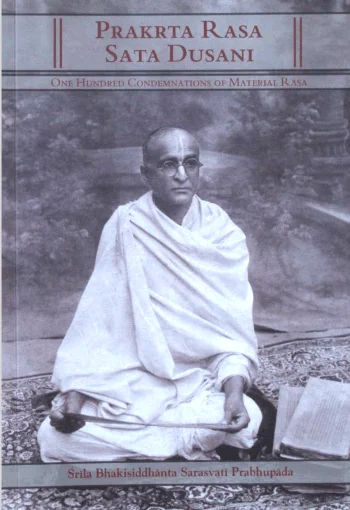
(Text 30 of Prakrta-rasa Sata-dusini by Srila Bhaktisiddhanta Sarasvati Thakura, with the Anuvrtti
commentary by Swami B.G. Narasingha)
anartha na gele name guna bujha jaya na
anartha na gele name krsna-seva haya na
If anarthas are not removed, then the Holy Name will never produce knowledge of the divine qualities of Krsna. If anarthas are not destroyed by the chanting of the Holy Name, one can never engage in service to Krsna.
Anuvrtti
In Caitanya-siksamrta and Krsna-samhita of Thakura Bhaktivinoda, the main anarthas to
devotional service have been described in relation to their appearance as demons killed by Krsna and sometimes as
demigods like Brahma, Varuna and Indra.
Putana represents the pseudo-guru who teaches false conceptions,
causing the death of the creeper of devotion.
Sakatasura represents the burden of old habits and the
burden of following the rules of sastra simply for formalities sake.
Trnavarta represents the
obstacle to worshiping Krsna that manifests in the form of pride of learning, the use of false arguments and dry
logic.
The destruction of the Yamala-Arjuna trees represents the removal of the pride stemming from
great wealth, which breeds violence, illicit sex and addiction to alcohol, loose speech and shameless brutality to
other living beings.
Krsna’s killing of Vatsasura represents vanquishing the obstacle of greed and the
sinful activities caused by greed.
Bakasura represents the system of cheating religions. When one
foolishly accepts a pseudo-guru and engages in the process of worship that is meant for exalted devotees, he is
cheated. Until such cheating propensities are destroyed, spiritual advancement is checked.
Intolerance,
violence and cruelty are personified in the demon Aghasura in the form of a giant serpent. The basis of compassion
for the living entities and devotion to Krsna are the same. Therefore, Krsna killed the Aghasura demon to save the
devotees from this anartha.
Although Lord Brahma was certainly not a demon, he was however put
into illusion by Krsna. Brahma’s disregard for the sweetness of Krsna and being overcome by the flowery words of the
Vedas represents skepticism and doubt that Krsna is the Supreme Personality of
Godhead.
Dhenukasura represents ass-like or gross discrimination (caste, color, creed and institutional
consciousness). Dhenukasura represents ignorance of one’s own spiritual identity (svarupa), the identity of
the Holy Name and the identity of Krsna. In krsna-lila, Dhenukasura cannot eat the sweet fruits from the
palm tree, and also opposes the attempts of others to eat them. Similarly, the previous acaryas have
written many literatures, which ass-like people cannot comprehend nor wish to allow others to see. These ass-like
devotees, who are simply interested in the regulative principles and are under the control of gross discrimination
are unable to make spiritual advancment. Without endeavoring to understand the science of attachment to Krsna, one
is comparable to an ordinary fruitive worker. Therefore, until this ass-like conception represented by Dhenukasura
is killed, one cannot advance in the science of Krsna consciousness.
Pride, deceit, harming others and
cruelty are enemies of anyone desiring to advance in Krsna consciousness. Therefore these anarthas must be
driven out of one’s heart. The Kaliya serpent being banished from Vrndavana by Krsna is a clear indication that,
without eliminating pride, deceit and cruelty from one’s heart, one cannot expect to become a resident of Vraja.
Sectarianism, or thinking one’s society to be the only means of attaining pure devotional service, is
the anartha represented by the forest fire. This sectarian thinking keeps one from associating with exalted
devotees of Krsna and impedes advancement. Thus extinguishing the fire of sectarian consciousness is most
important.
Pralambasura represents lust for women, greed, desire for worship and position. Even if one is
a householder, it is necessary to give up lusty desire and even if one is a guru, one should not be desirous of
being worshipped or receiving great honors, or being recognized as a rasika-acarya.
The wives of
the yajnika-brahmanas were blessed by Krsna, whereas their husbands were not so fortunate. The
brahmanas were indifferent to Krsna and Balarama due to identifying with the varnasrama system and
attachment to karma-khanda activities. The varnasrama system and karma-khanda have both
been rejected by Sri Caitanya Mahaprabhu. Therefore His followers should diligently do the
same.
Defeating Indra by lifting Govardhana Hill is Krsna’s direct instruction to His devotees that the
worship of minor demigods for material gain is unnecessary and an obstacle to bhakti.
Deluded by
madness, some devotees may fall victim to intoxication, thinking that alcohol, marijuana, LSD and other such
intoxicants are helpful in advancing in Krsna consciousness. However, the happiness in Vraja (known as
nanda) cannot be enhanced by any external or material supplement. Therefore, Krsna’s saving Nanda Maharaja
from the court of Varuna, who symbolizes intoxication, is to discourage such practices among the
devotees.
The snake which attempted to swallow Nanda Maharaja represents a devotee’s inclination in
ecstasy to merge with Krsna. As a Vaisnava’s happiness continually increases in the process of worship, one
sometimes loses consciousness. At that time the feeling of merging may overcome one. This feeling of merging with
the Lord is the snake that swallowed Nanda Maharaja. A practitioner who remains free from this snake will become a
qualified Vaisnava.
Sankhacuda symbolizes the desire to acquire fame and women through the practice of
bhakti. This abominable activity is quite common among pseudo-devotees, but real Vaisnavas always avoid the
association of such despicable persons.
Aristasura, the bull demon, symbolizes disregard for
bhakti and attraction for cheating religion. Weak-hearted show-bottle devotees give up the path of
vaidhi-bhakti and try to enter the path of raganuga-bhakti, but when they are unable to realize
rasa, they behave like Aristasura by cultivating perverted material activities. These unfortunate persons
will certainly meet Krsna – not in the form of the affectionate cowherd boy of Vraja, but in the form of
death.
The illusion of being a great devotee or a great acarya, is represented by Kesi who
appeared in Vraja-bhumi as a horse. Kesi represents the practicing devotee’s mentality of being more expert than
others in bhakti, lording it over others and material pride. As a Kesi-like devotee gradually begins proclaiming his
own superiority, he develops a mentality of disrespect for the Lord and His devotees and falls down from his
position. Therefore, it is important to prevent this mentality from entering the heart. Even if one is expert in
devotional service, a Vaisnava will never give up the quality of humility.
The demon Vyomasura represents
stealing others property and speaking lies. Both these habits are contrary to the development of pure devotional
service and therefore such should be strictly avoided.
Thakura Bhaktivinoda summarizes as follows:
“Here is the secret of vraja-bhajana. Dhenukasura represents the wicked disposition that carries heavy loads. Pralamba represents the inclination to enjoy women, greed, the desire for worship and material prestige. The practitioner must eliminate these anarthas by his own endeavors, with the mercy of Krsna. Ignorance of the knowledge of one’s own spiritual identity (sva-svarupa), the Holy Name (nama-svarupa) and the identity of the Lord (upasya-svarupa) are all represented by Dhenukasura. The practicing devotee must remove these anarthas with great endeavor. The lust for man or woman, covetousness, the endeavor for mundane enjoyment, conceit, desire for worship and fame – these are all represented by Pralamba. One should realize that these are extremely ruinous to nama-bhajana and make great attempts to eliminate them. If one’s humility is sincere, then Krsna will certainly be compassionate. In this way, Baladeva will appear and all other problems will be eradicated in a second. Then gradually, favorable cultivation of one’s bhajana will occur. This process is very secret by nature and should be learned from a genuine guru, who is spotless in character.” (Caitanya-siksamrta 6.6)
Those who desire to serve Krsna purely in the mood of Vraja should destroy the above-mentioned anarthas.
Some of these anarthas must be eliminated by a devotee’s own endeavor and purity, and others can be
destroyed by the mercy of Krsna. Bhaktivinoda explains that the anarthas represented by Dhenukasura and
Pralamba are actually destroyed by Baladeva. If a devotee prays with humility to Krsna to remove all these
anarthas in the heart (that are represented by the demons that Krsna killed), then Krsna will certainly do
so. Other obstacles (represented by the demons killed by Baladeva) have to be removed by the one’s own endeavors. A
living entity is able to personally destroy these obstacles that are found under the shelter of religious duties
through savikalpa-samadhi (reasoning and introspection).
It may also be appropriate to point out
here that most of the demons killed by Krsna were disposed of before the pastimes of rasa-lila began. This
includes the illusion of Brahma and defeat of Indra. Those dealt with before the rasa-lila were Putana,
Sakatasura, Trnavarta, the Yamala-Arjuna trees, Vatsasura, Bakasura, Aghasura, the illusion of Brahma, Dhenukasura,
Kaliya, the forest fire, Pralambasura, the yajnika-brahmanas, Indra and Varuna. Certainly one should be
free from the anarthas represented by the above personalities before one thinks one’s self to be qualified
for raganuga-bhakti.
Furthermore, the demons Sankhacuda, the snake that swallowed Nanda
Maharaja, Aristasura, Kesi and Vyomasura were dispensed with after Krsna began His rasa-lilas. Therefore,
it should be understood that even an advanced devotee should be mindful not to allow the anarthas
represented by the demons killed after the start of Krsna’s madhurya pastimes to raise their head and enter
his heart.
(This book is available at https://store.devavision.org/)